Providing sport, education and mentoring for the next generation through basketball

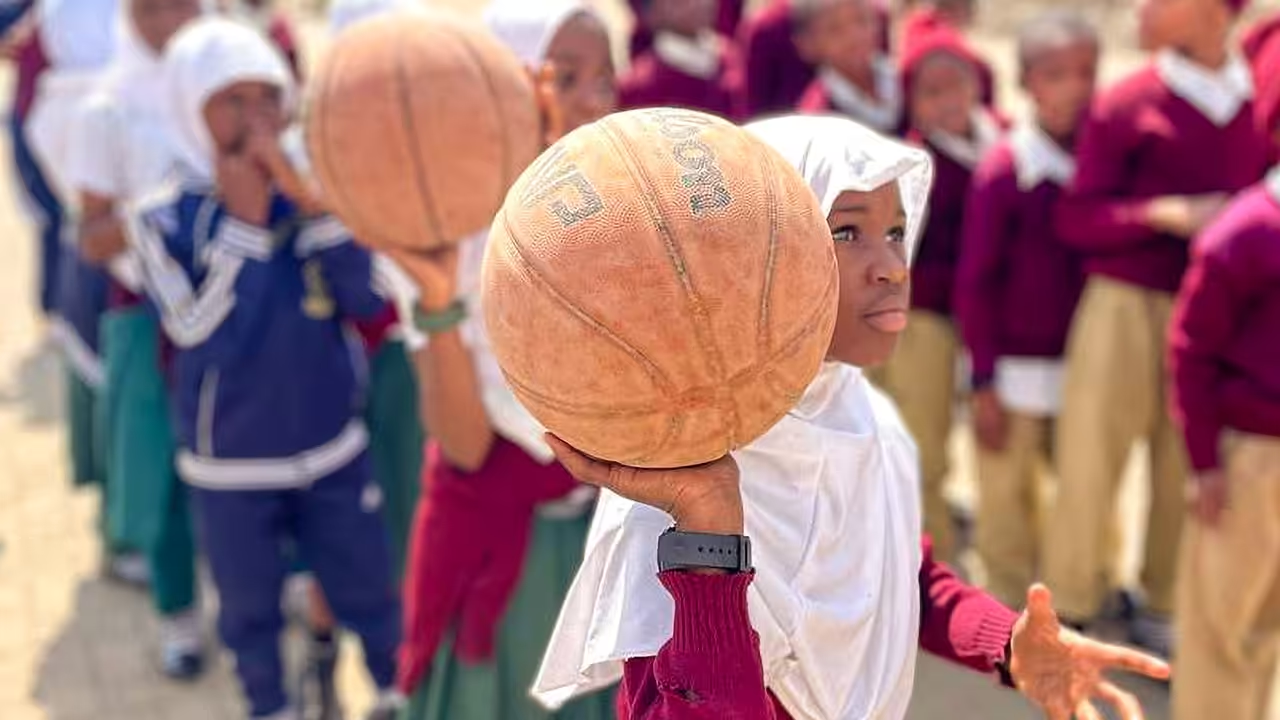
A girl wearing a headscarf from Tanzania proudly holds up a basketball during training.

Pamoja = Together: The game of basketball goes beyond the court.

Pamoja Basketball Project

Pamoja Basketball

Sport Management, Sport Coach

1 to 3 months

Flag of Tanzania
COACH ABROAD trusted project: The Badge of Trust in Silver

For 2 months from

2114€

Sports activities 2

BasketballHandball

Social Change Focus

Gender equality, Girls empowerment, Health and well-being, Life skills

Project ID

TZ-PB-BBC

Project provider

Pamoja Basketball

Type of organisation 7

NGO / NPO

Country

Tanzania

Location

Arusha

Places offered

4-6

Age (min)

18

Gender preference 3

None

Available months

Jan to Dec (except June)

Starting time 8

Anytime

Work schedule 4

Wed, Fri, Sat, Sun

Hours per day 4

Approx. 5

Transfers

Airport Arusha

Home « » project

Public transport

Place to stay

Host family

Meals 5

Breakfast & Dinner

Spoken languages

English / Swahili

Laundry

extra charge

Wifi home 6

No

Wifi project 6

No

Ongoing Activities

Basketball

Future Activities

Handball

Pamoja, the Swahili word for ‘together’, is the name and credo of the Pamoja Basketball Project. This community initiative in Arusha, Tanzania, has clear goals: to empower young people through basketball, to promote gender equality, and to strengthen the community. The athletes receive top-class basketball training, which improves not only their athletic skills, but also their life skills. Some former participants have gone on to play for regional and national teams and receive college scholarships.

Many young players have dreams that can and should be encouraged, regardless of whether those dreams are related to basketball. Adults play an important mentoring role in this process. Pamoja aims to provide a safe environment for young girls and boys after school where they can develop new skills. This includes a barrier-free programme designed to integrate children and young people who might not otherwise have the opportunity.

The Pamoja project not only teaches young people, but also empowers them to take on teaching and encouraging roles. The aim is to nurture a new generation of confident, enlightened leaders who are committed to developing their peers. It doesn’t matter if someone has played basketball all their life or is trying it for the first time. In line with the motto ‘Skills are there to be shared’, former participants help those who want to learn.

Free, entertaining and rewarding programmes

It is not easy to keep young people away from various problems and negative influences. That is why Pamoja runs a variety of targeted programmes to engage with children and young people from different backgrounds, creating an inclusive, supportive environment in which they can develop personally and sportingly. All programmes are free for players to access.

"Her Time to Shine“ – Basketball programme for girls and young women in Arusha who simply want to play!

The 'Her Time to Shine' programme is aimed at up to 100 girls of school age. It focuses on providing basketball training, mentoring, self-defence training and menstrual health education. The programme creates safe spaces where girls can play, express themselves and build self-confidence. By doing so, the programme challenges deep-rooted gender barriers in Tanzanian society and advocates for more sporting opportunities and support for young women in the community. Pamoja is actively working to increase the number of female participants within the organisation.
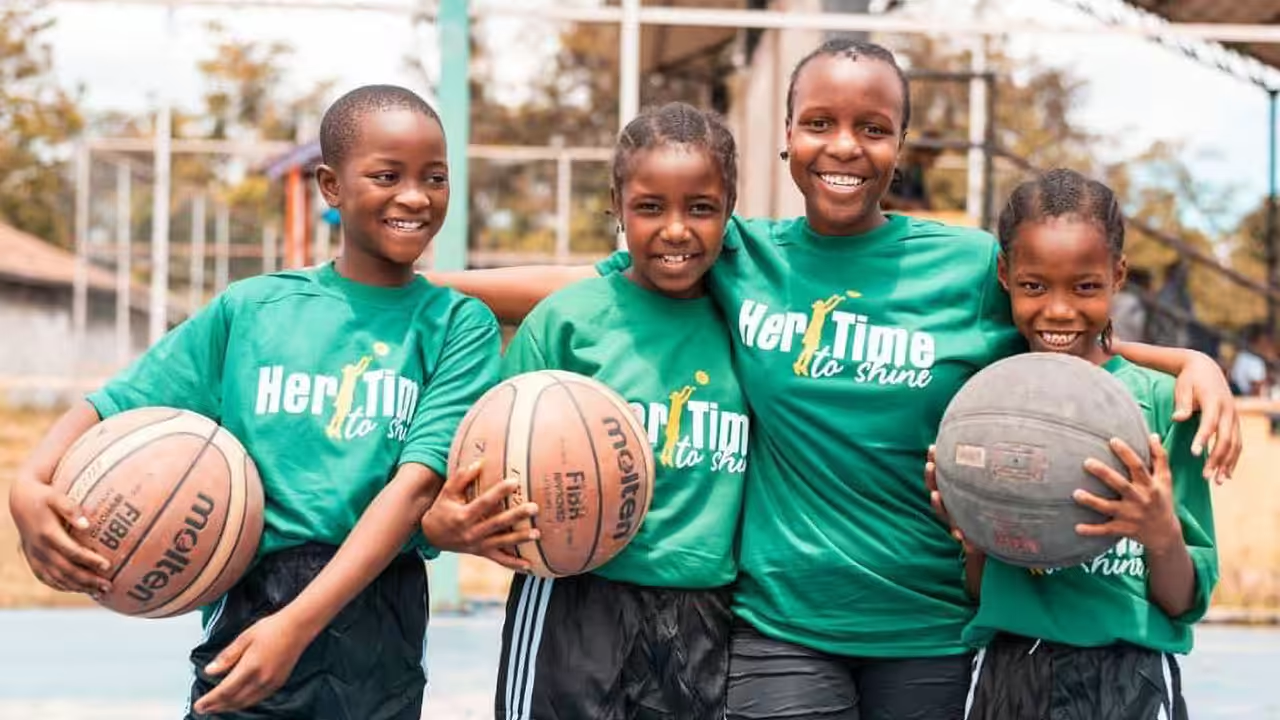
The girls from the basketball project are posing for a group photo, each holding a basketball.
Young women have traditionally been denied access to sports, and they are twice as likely to drop out as young men. Coaches and mentors from the Pamoja Basketball Project are working hard to challenge long-standing stigmas in Tanzania.

"Grow the Game“ – Basketball from the very beginning

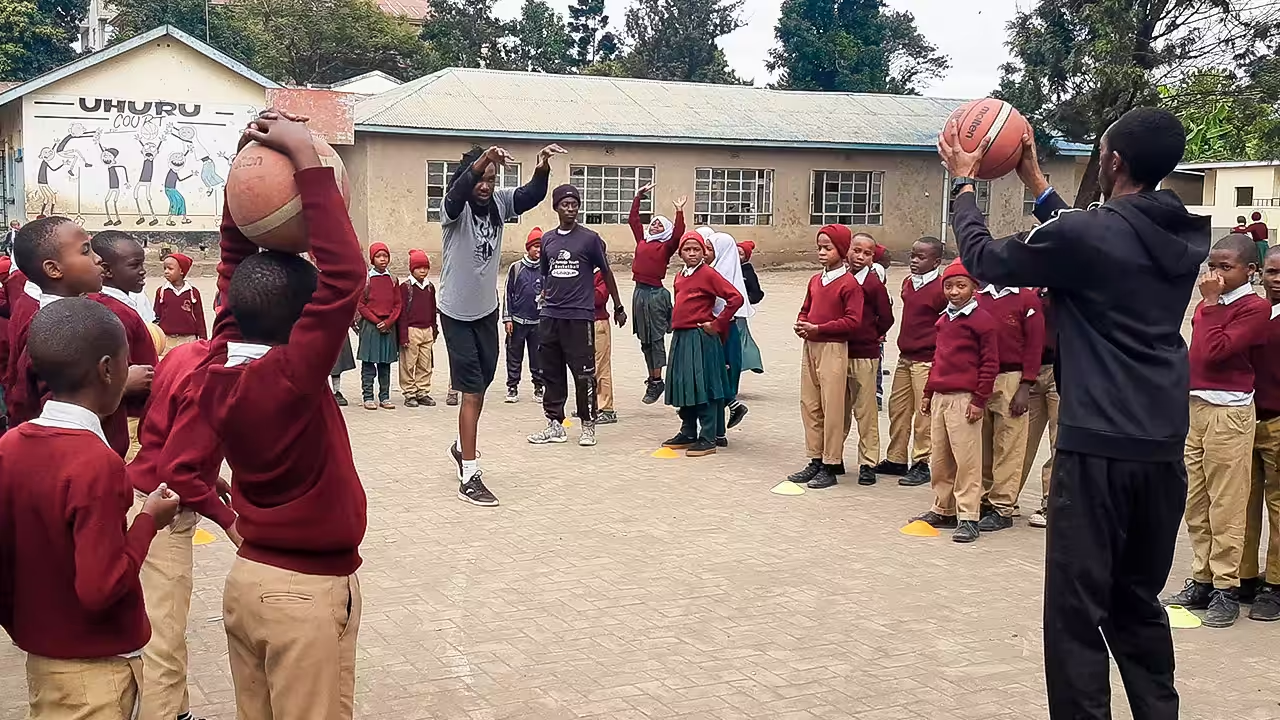
The 'Grow the Game' programme delivers weekly training sessions in primary schools to promote basketball. The Pamoja Project provides the necessary equipment, and its coaches lead various training sessions. Depending on their age and ability, interested pupils are invited to weekend training sessions in the community.

„Skills training camps for all ages“ – the biggest event

At this training camp, players and former players of all ages come together for a day of playing and socialising. From exercises and training games to rehearsing chants, every camp is extremely entertaining. It is a great opportunity for volunteers and coaches to pass on their skills and values, as the participation of children and young people is consistently high. Pamoja hopes to build its own stadium one day to provide the community with more space for events and programmes beyond basketball.

„Senior-Team“ and „Scholarship“ programm – the step stone to greater things

The programme supports more experienced players with specialised basketball training, practice games and targeted mentoring. Additionally, young players interested in pursuing a career in college basketball receive support from more advanced players. These programmes provide a springboard to scholarships and help players identify concrete opportunities in college basketball.
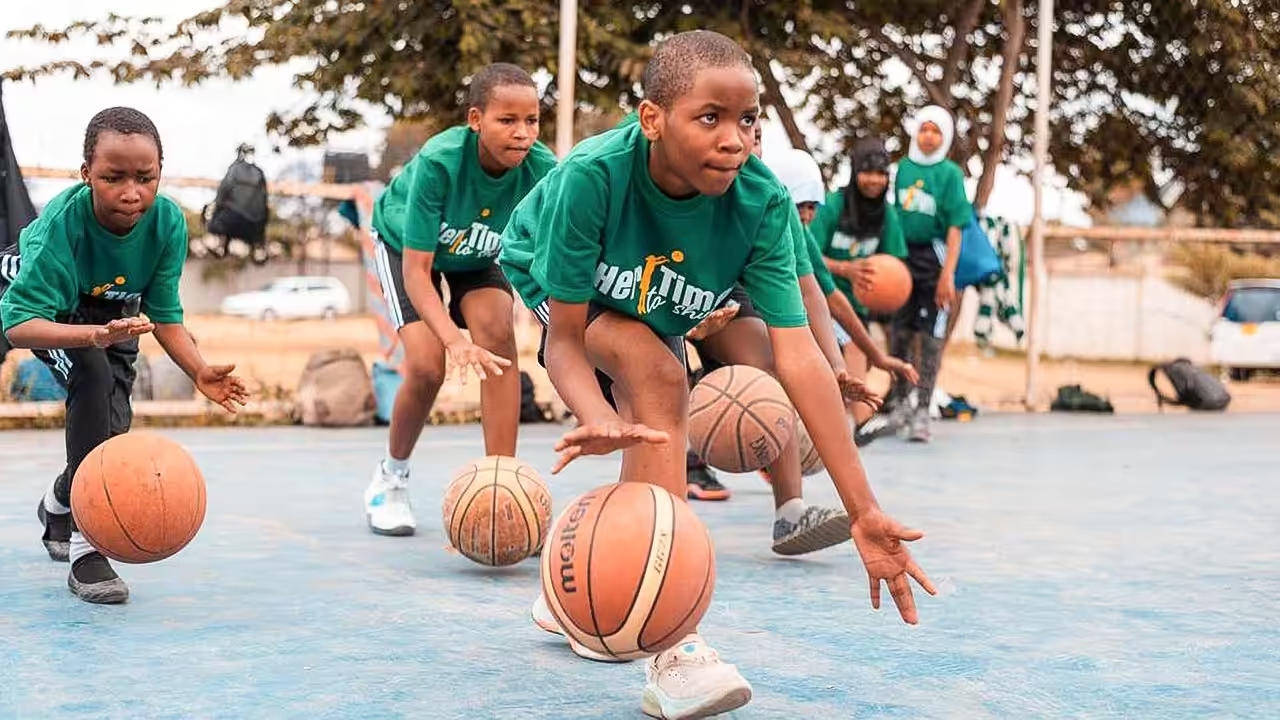
During basketball training, both boys and girls dribble while crouching down.
Students taking part in the basketball project in Tanzania watch two coaches demonstrate shooting techniques.
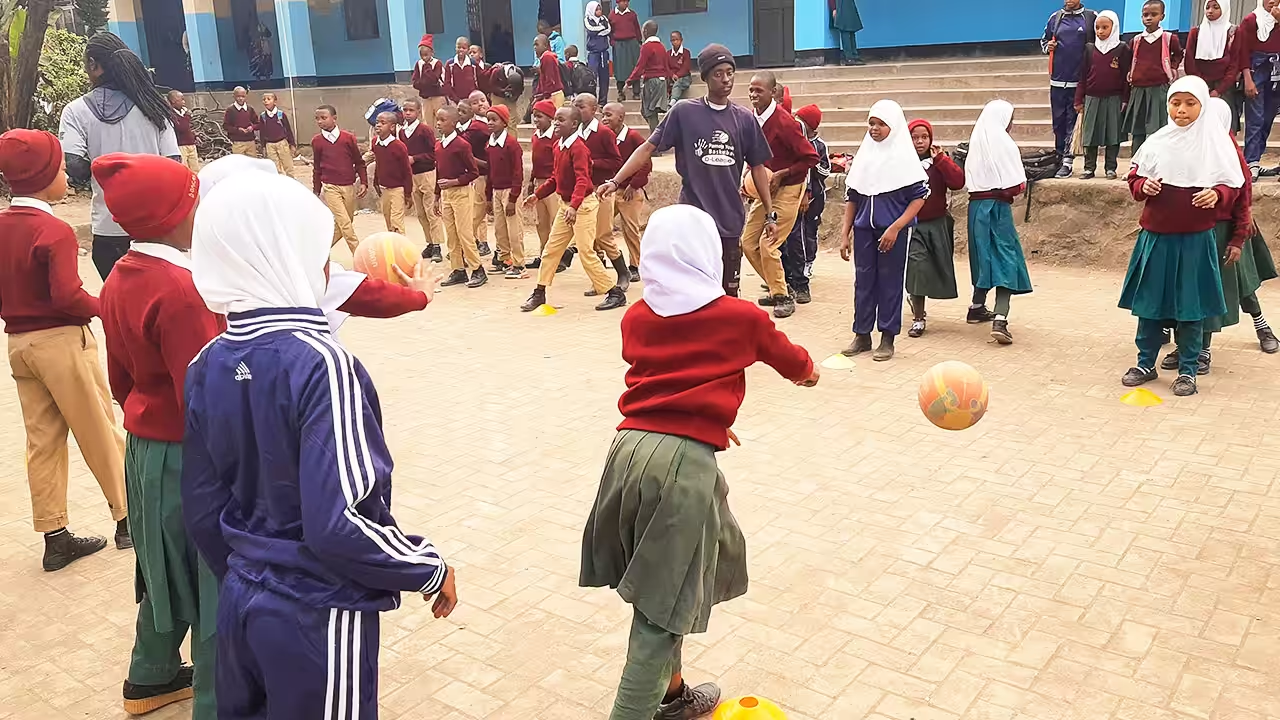
Girls in school uniforms stand facing each other, passing basketballs back and forth.
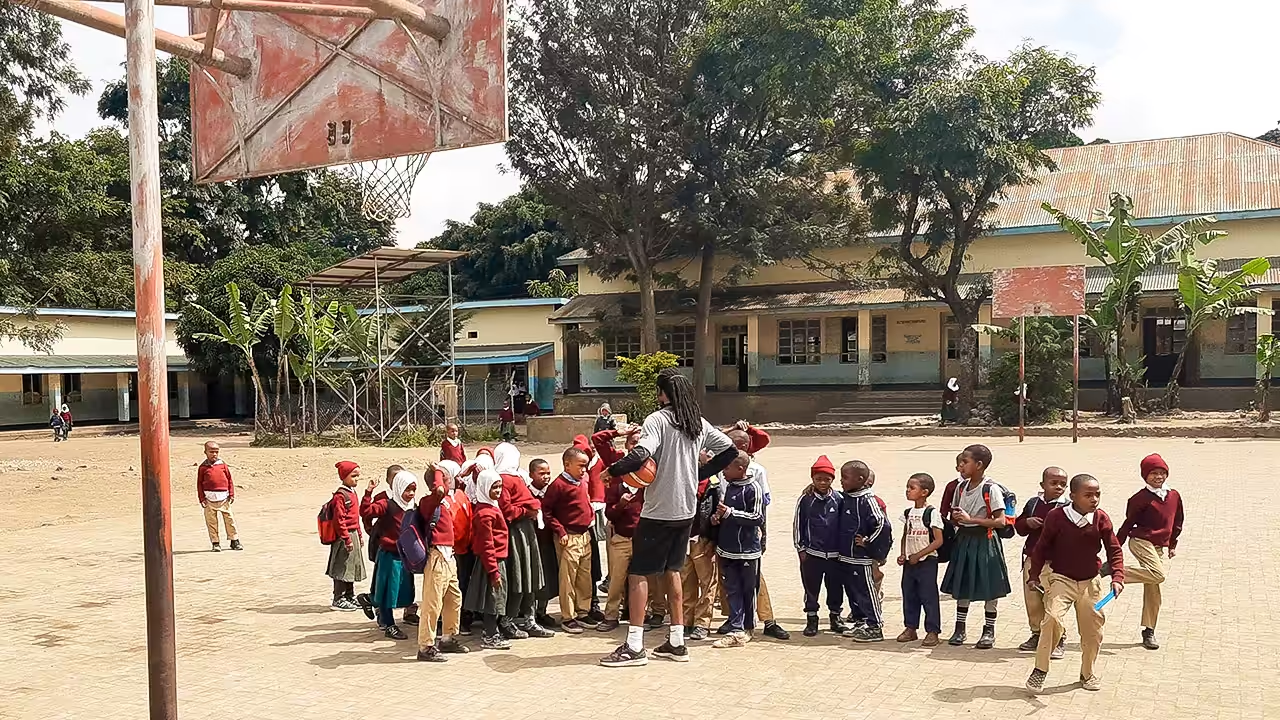
On a sandy school playground in Tanzania, a group of boys and girls are listening attentively to their basketball coach.
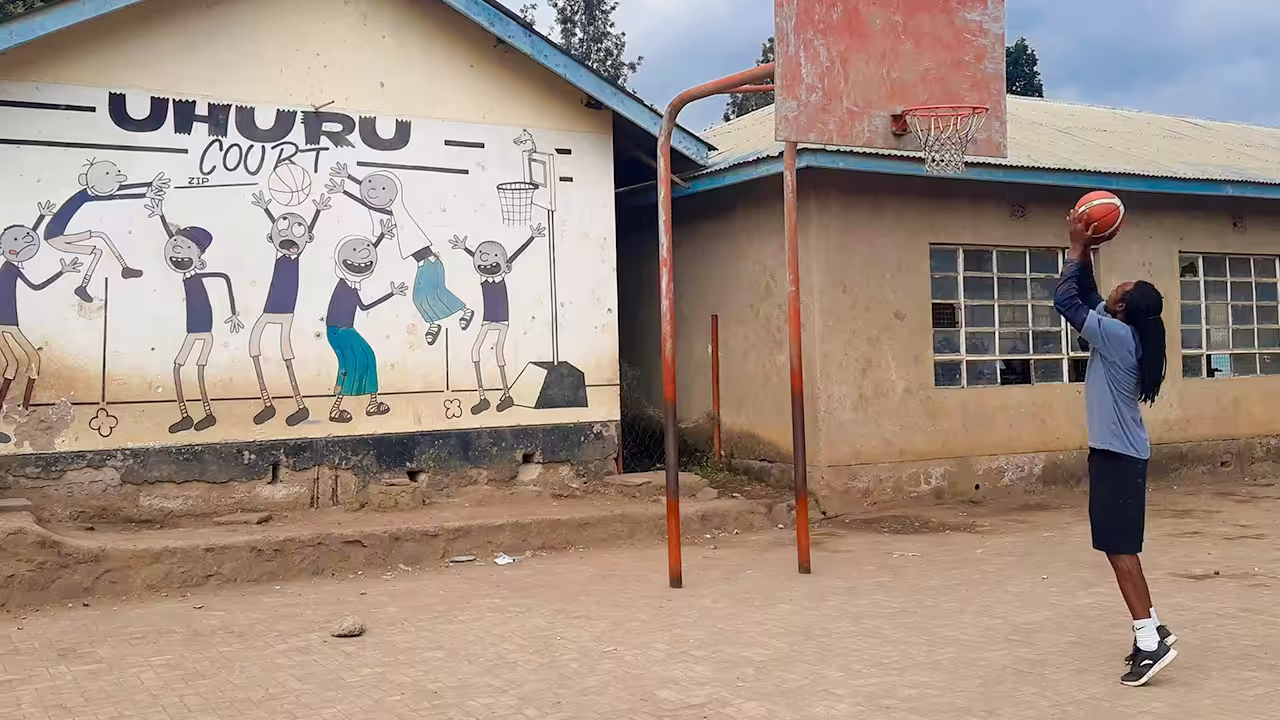
Phabian Mjarifu, the Pamoja Basketball Project's project mentor, shoots a basket at a primary school in Tanzania.
  • Help with organising and planning coaching sessions.
  • Provide assistance during the coaching sessions.
  • Take photos and videos for social media clips.
  • Occasionally, help with organising tournaments and games and creating recruitment profiles for players in the scholarship programmes.
  • Training sessions at a primary school on Wednesday and Friday.
  • Training sessions with the Pamoja teams (all ages) on weekends (usually on Saturday).
  • Tasks are assigned according to expertise. There is usually a weekly training plan involving various sessions and exercises, which will be discussed upon arrival.
  • Those interested in social media can also take photos or videos, edit posts and update the website.
  • Providing assistance with organisation and implementation as a match or tournament approaches.

Please note that days and times may vary depending on the project and task.

There are no training sessions or events in June. This makes it the perfect time to explore the country on your own.

Health & Safety

There are a few things you should bear in mind to ensure your safety and health during your stay. By exercising a little caution, you can enjoy everything the country has to offer without worry.

Water: Tap water in Tanzania is not safe to drink and should not be used to wash fruit or vegetables that will not be cooked. Bottled water is widely available and affordable in most shops.

Malaria risk: the malaria risk in the Arusha region is moderate. To stay safe, you are recommended to sleep under a mosquito net and wear long clothing at night. If you are planning to visit national parks or other areas of Tanzania, consider taking malaria prophylaxis for added protection.

Swimming in rivers and lakes: Avoid swimming in rivers or lakes unless you are certain that the water is safe. In some areas, there is an increased risk of waterborne diseases such as intestinal infections or bilharzia.

Driving yourself:The roads in Arusha can be very busy. If you decide to drive yourself, exercise extra caution during the day and at night. Visibility can be poor, and traffic can be unpredictable. Unpredictable overtaking manoeuvres by other vehicles, as well as poor road conditions and potholes, can also increase the risk of accidents.

Public transport: Arusha has a well-developed public transport network, including buses (also known as ‘Dala Dalas’) and motorcycle taxis (‘Piki Pikis’). If you would like to use these, please talk to us first to find out about the routes and costs. Dala dalas are a fun and affordable way to get around. However, keep an eye on your valuables and avoid taking out your mobile phone or wallet. If a bus seems too empty or unsafe, it is better not to get on. Piki Pikis are widespread in the city. Agree on a price before starting your journey. Also check that the driver is sober and, if necessary, ask them to drive more slowly.

Public spaces: Tanzanians love spending time outdoors, so you’ll encounter plenty of people on your walks. While the locals are friendly and open, crowded areas such as markets can get busy. It’s a good idea to keep your valuables secure and out of sight.

Weather & Climate

Thanks to its location at the foot of Mount Meru, Arusha enjoys a mild and pleasant climate. The region experiences two rainy seasons: a longer one from March to May and a shorter one in October and November.

The warmest period is from November to March, when daytime temperatures can reach 30°C (86°F). However, evenings can be surprisingly chilly, with temperatures dropping to 10°C (50°F) in poorly insulated areas. It is therefore advisable to bring a warm sweater or jacket for the evenings.

The coldest months are June and July, when the average daytime temperature is around 20°C (68°F). It can get even colder in higher-altitude areas such as national parks or during mountain hikes.

Essential items to bring with you include comfortable clothes, modest outfits, a good rain jacket, sturdy shoes and layers for cooler nights.

With a population of around 400,000, Arusha offers a wide variety of leisure activities.

If you love nature, you can go hiking to local waterfalls, explore Arusha National Park or go canoeing on Lake Duluti. Many of the area’s lodges and hotels also offer access to pools and relaxation facilities.

Those interested in culture will enjoy Arusha’s lively music and nightlife scene, which features numerous clubs and live music venues. You can also visit local coffee farms to learn about the cultivation and processing of Tanzania’s renowned coffee. You can attend gyms in the Usa River and Moshono complexes during your stay.

Adventure seekers can climb Mount Meru, often referred to as the ‘little brother’ of Kilimanjaro, or take a cultural tour of traditional Maasai villages.

The town of Moshi, near the base of Mount Kilimanjaro, is just about an hour’s drive from Arusha. Visitors can enjoy scenic hikes to waterfalls, relax at the Kikuletwa Hot Springs or attempt to climb Kilimanjaro itself.

Arusha is the perfect starting point for safaris to world-renowned parks such as the Serengeti, Lake Manyara, Tarangire and Ngorongoro Crater. If you’re looking for breathtaking landscapes, be sure to visit Lake Natron and the impressive Ol Donyo Lengai volcano.

In the east, the Usambara Mountains attract hikers with their lush forests and scenic trails. Further afield, you can take a bus to the coastal towns of Pangani or Dar es Salaam. From there, you can easily catch a ferry to the idyllic island of Zanzibar, which is renowned for its white sandy beaches and rich Swahili culture.

External information Arusha:

Requirements

Police Clearance

Required

Age (min)

18

Language skills

English

Duration (min/max)

1 to 3 months

COACH ABROAD

Form completed

Useful skills / documents

  • Knowledge of social media

Costs

Included

Transfers

Airport Arusha

Place to stay

Host family

Meals

Breakfast & Dinner

Price for 2 months from 1a

2114€

Additional month 1b

570€

Own responsibility

These items are not included in the project cost and are your responsibility:

  • Flights, visas and all necessary documents and associated fees
  • Travel and medical insurance, vaccinations
  • Personal activities/travel and related expenses
  • Per day between €3 and €7, depending on whether you use a piki piki (motorbike taxi) or matatu (pickup van or shared taxi) to get to the project location.

Do you have any questions about the "Pamoja Basketball Project" project?

Just send us a message and we will get back to you as soon as possible. Please make sure you ask as specifically as possible. Thank you very much!

Information on the handling of user data can be found in our Privacy Policy
Phabian Mjarifu is the founder and mentor of the social sports project Pamoja Basketball in Arusha, Tanzania.

Project mentor

Phabian Mjarifu

"Together we can make our biggest dreams a reality. Through training and teamwork, we found that our programming fosters extraordinary leadership, confidence, perseverance and joy."

Logo COACH ABROAD

Thank you!

Your submission was successful.

We will get back to you as soon as possible.